The Train · Entry 04
Why There Are Rubies In It
Hard bearings at the fastest pivots. What they actually reduce.
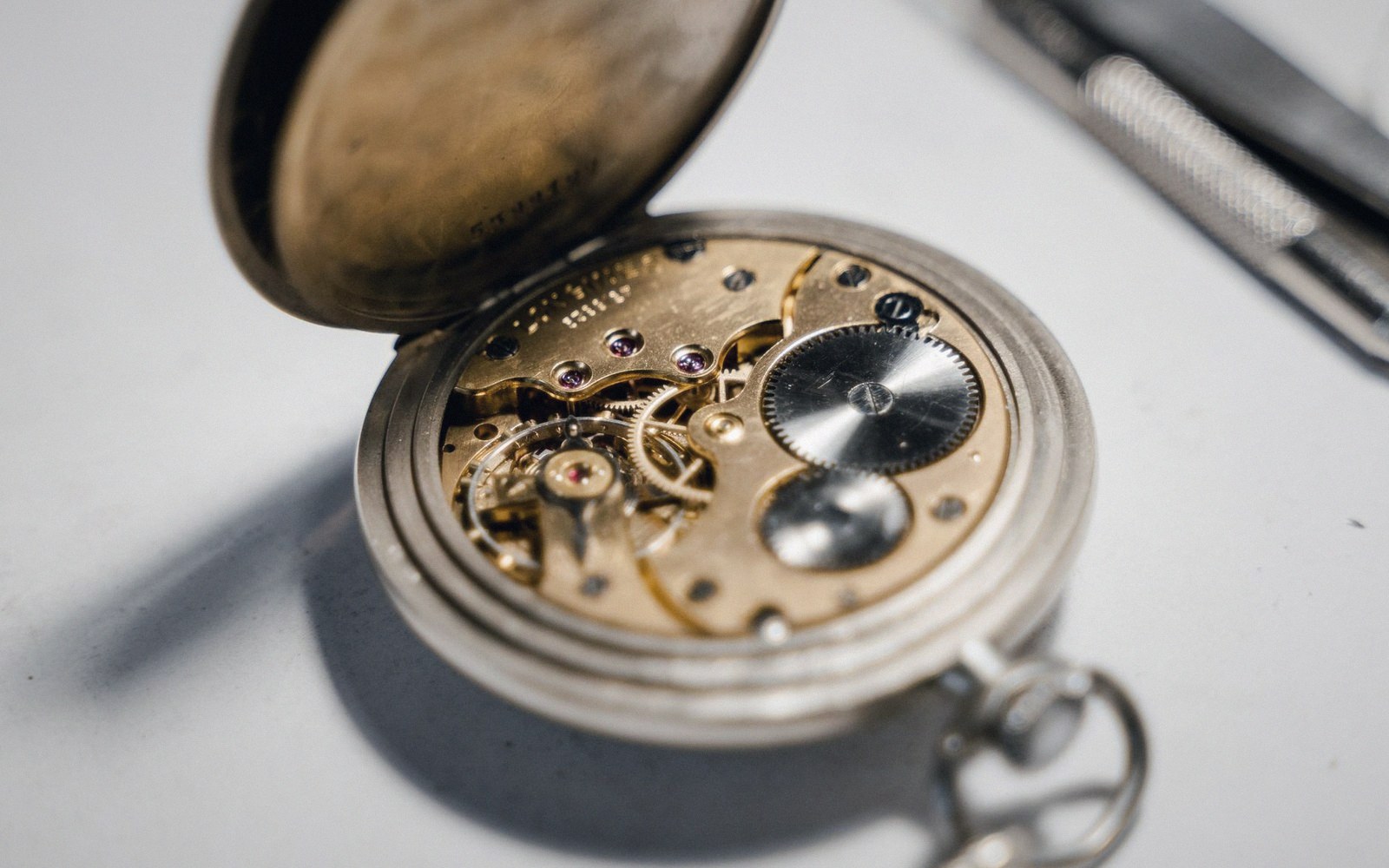
Hard bearings at the fastest pivots
Open a watch movement and hold it to the light. The small red circles — one at most of the arbor pivots, sometimes fifteen or more of them in a well-made piece — are not decoration. They are bearings, and they are there because steel pivoting in brass destroys itself with surprising speed.
The problem is straightforward. Every pivot in the going train rotates, and it rotates against something. In early work that something was the brass plate itself, broached to a close fit. Brass is soft enough to seat a hardened-steel pivot without cracking, which made it practical. It is also soft enough to wear. A pivot that turns tens of thousands of times a day will cut a groove into a brass hole within years, and a worn hole allows the pivot to wander — changing the depth of mesh between wheel and pinion, altering the depthing until the train runs roughly or stops. The watch loses time, then refuses to wind on.
The solution, adopted in better English and Swiss work from the early eighteenth century onward, was to sink a harder material into the plate at each bearing hole. Garnet was used first; synthetic ruby — aluminium oxide, corundum — became the standard. Ruby has a hardness of nine on the Mohs scale, against steel's roughly seven. A hardened-steel pivot running in a ruby hole is, in tribological terms, the right way around: the harder material takes the wear and virtually none occurs. In a well-maintained movement the pivot and jewel may show no measurable wear after a century of use.
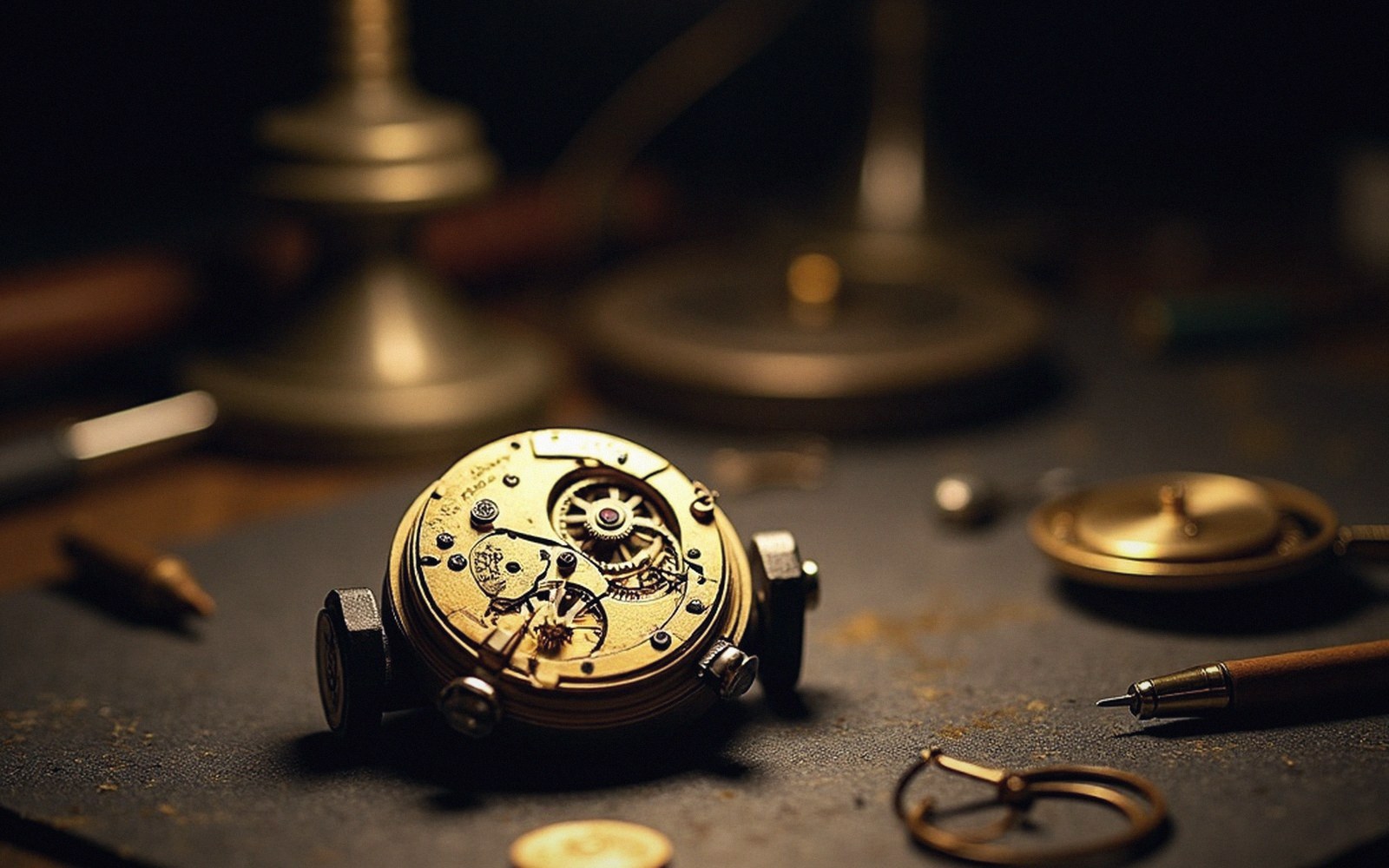
The jewel itself is not simply a hard sleeve. It is ground to a precise inside diameter, set in a brass collet that is pressed into the plate, and its inner surface is polished to a finish that reduces friction as much as hardness reduces wear. Some jewels — the end-stones sitting flat against the pivot tip — do almost no work mechanically but prevent the tiny film of oil from migrating away along the arbor. Without them the lubricant wicks out in months.
Jewels are placed selectively. The slowest arbors in the train — the barrel and the centre wheel — often run in plain brass because their rotation rate is low enough that wear is negligible. The faster a pivot rotates, the more urgent the need: the third wheel, the fourth, and above all the escape-wheel pivot, which reverses under impulse and recoil at every beat, receive jewels as a matter of course. The escapement's pallet stones are jewels too, but they work differently — they are impulse surfaces, not bearings — which is a distinction worth keeping clear.
Fifteen jewels, seventeen, twenty-one: the count varies with the design. Each one is there for a reason.
From the bench notes
The bearing hierarchy
| Item | What it means |
|---|---|
| Barrel / centre wheel | often run in brass; rotation too slow to wear brass measurably |
| Third wheel, fourth wheel | jewelled in any serious movement |
| Escape-wheel pivot | jewelled; reversal under recoil makes this the most stressed bearing |
| Pallet stones | jewels used as impulse faces, not bearings; a different function entirely |
| End-stones | flat jewels at pivot tips; retain oil, not primarily structural |
From the bench notes
Key material facts
| Material | What it means |
|---|---|
| Ruby (synthetic) | aluminium oxide, corundum; Mohs hardness 9 |
| Steel pivot | Mohs hardness roughly 7–8 depending on temper; softer than the jewel it runs in |
| Brass plate | Mohs hardness roughly 3; wears quickly under repeated pivot contact |