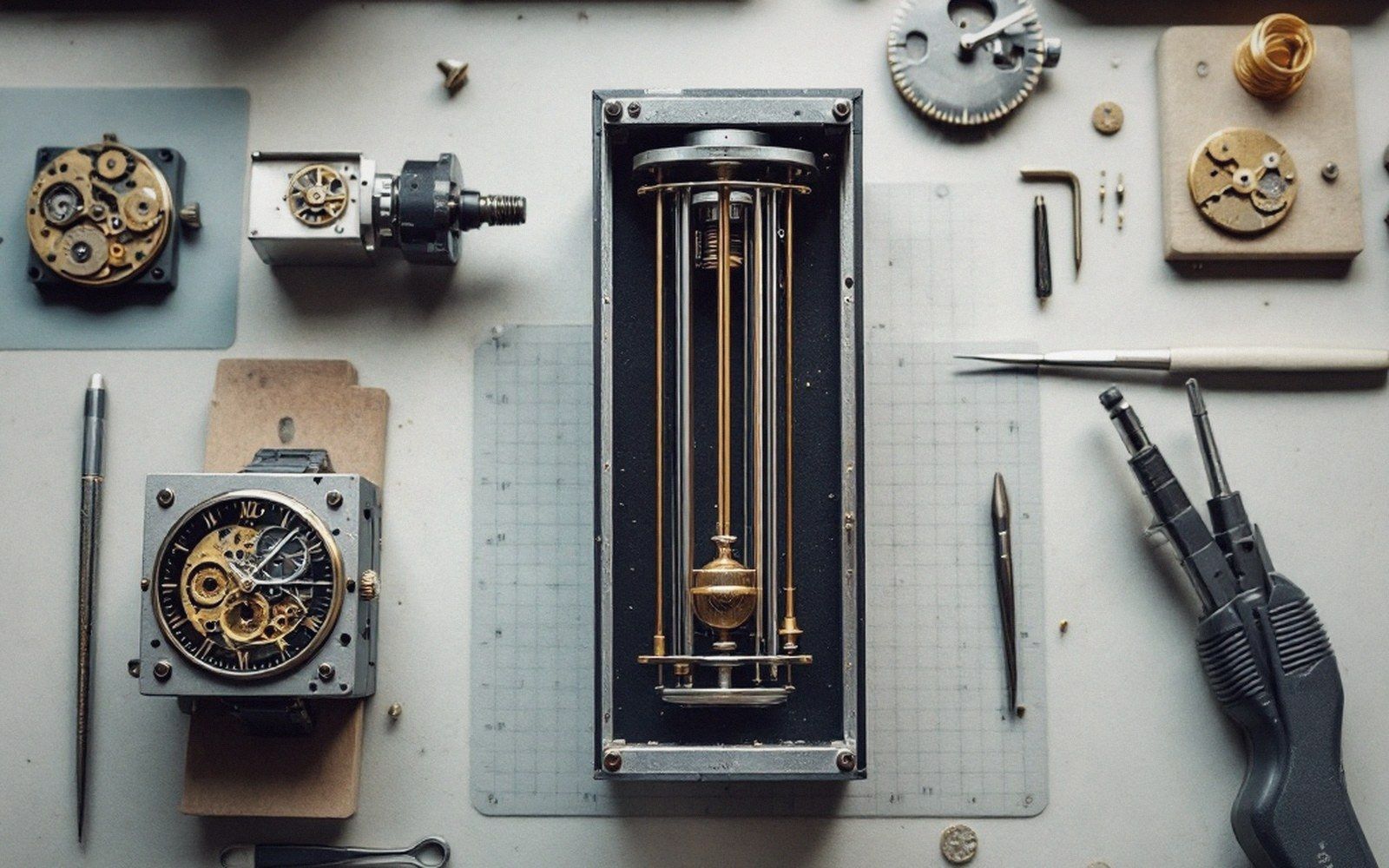
Why a Pendulum Keeps Time
Period depends on length and gravity and almost nothing else — which is the whole reason it works, and also the source of every problem that follows.
The lead entry · Escapements
The central difficulty of every mechanical timepiece: energy has to reach the oscillator without disturbing it, and the oscillator has to release the train without being pushed off its own rhythm. Every escapement is one answer to that.
Read the entry
| № | Escapement | What it does | The error it introduces | What was done about it | Arc, degrees |
|---|---|---|---|---|---|
| 01 | Verge | Pallets on a vertical staff stop a crown wheel and take an impulse in the same motion. | The oscillator is never free: its period is set partly by the driving force. | Superseded rather than fixed — the geometry was pulled into one plane. | 80–100 |
| 02 | Anchor | One pair of pallets embraces several teeth in a single plane, briefer contact than the verge. | Recoil: the escape wheel is pushed backwards at every beat, so rate follows the weight. | Small arcs, heavy bobs, and eventually a locking face that cannot drive the wheel. | 4–6 |
| 03 | Deadbeat | Locks the wheel dead on an arc struck about its own centre; impulse only near the middle of the swing. | Wear and oil now matter: the locking faces slide under load with no recoil to relieve them. | Jewelled pallets, clean pivots, and a light train — the standard for precision regulators. | 2–3 |
| 04 | Lever | Detached both ways: the balance runs free between unlockings, with a safety action against knocks. | Sliding friction at every unlock, and an amplitude that falls as the mainspring runs down. | Faster beats, a Breguet overcoil, and adjustment in the positions. | 270–300 |
| 05 | Detent | One impulse in one direction only; the balance slips past a light passing spring on the return. | It will set if knocked — the same detachment that keeps the rate makes it fragile. | Confined to instruments that sit in a gimballed box rather than a pocket. | 280–320 |
Every entry states the same three things in the same order: what the mechanism does, what error that introduces, and what was done about it. The Escapements section carries the full six entries, including the problem they are all answering.
Letting the train forward in equal amounts.
Pendulum, balance, and what makes a period stable.
Counting the beats and showing the result.
Making it right, and keeping it right.
Quartz, caesium and what changed.
Period depends on length and gravity and almost nothing else — which is the whole reason it works, and also the source of every problem that follows.
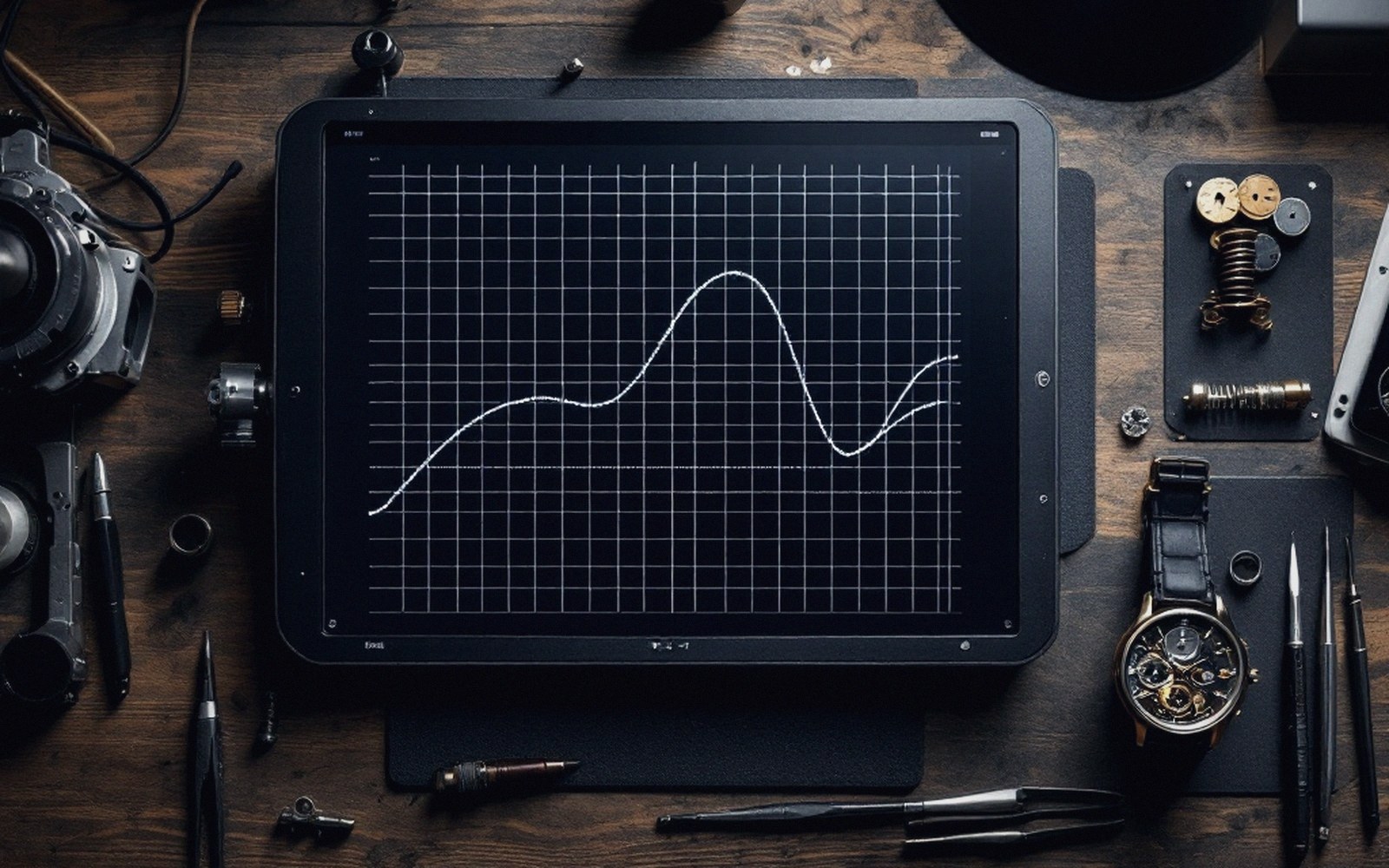
Rate, beat error and amplitude read off a microphone and a screen. How each fault looks, and why amplitude is the number that reveals the health of the movement.
A quartz oscillator runs at tens of thousands of cycles per second and costs almost nothing, which ended the argument commercially even where mechanics survived culturally.

A material that barely expands, and what it did to precision timekeeping.
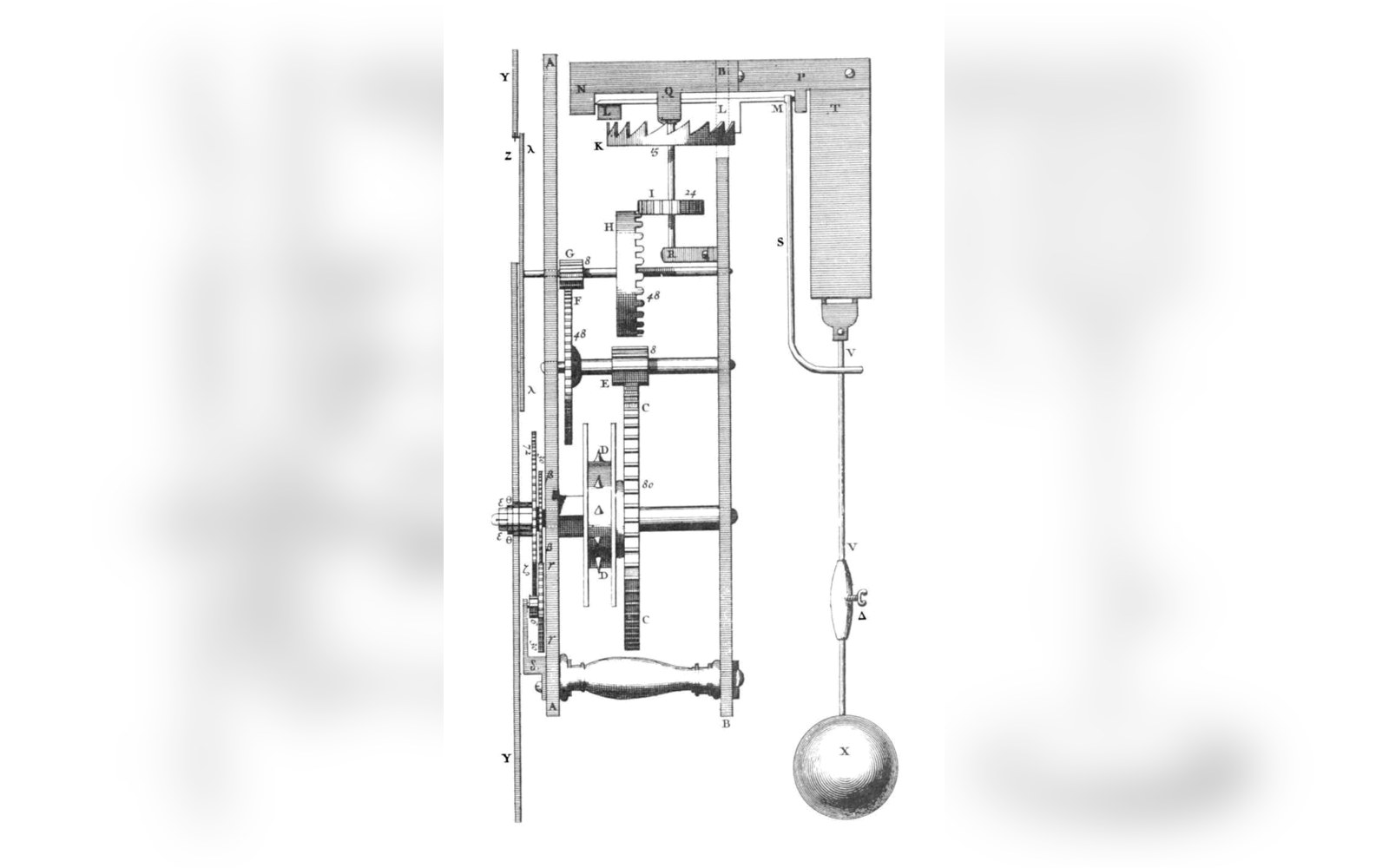
The ideal of a period that does not change with amplitude — the property the whole site is named for.
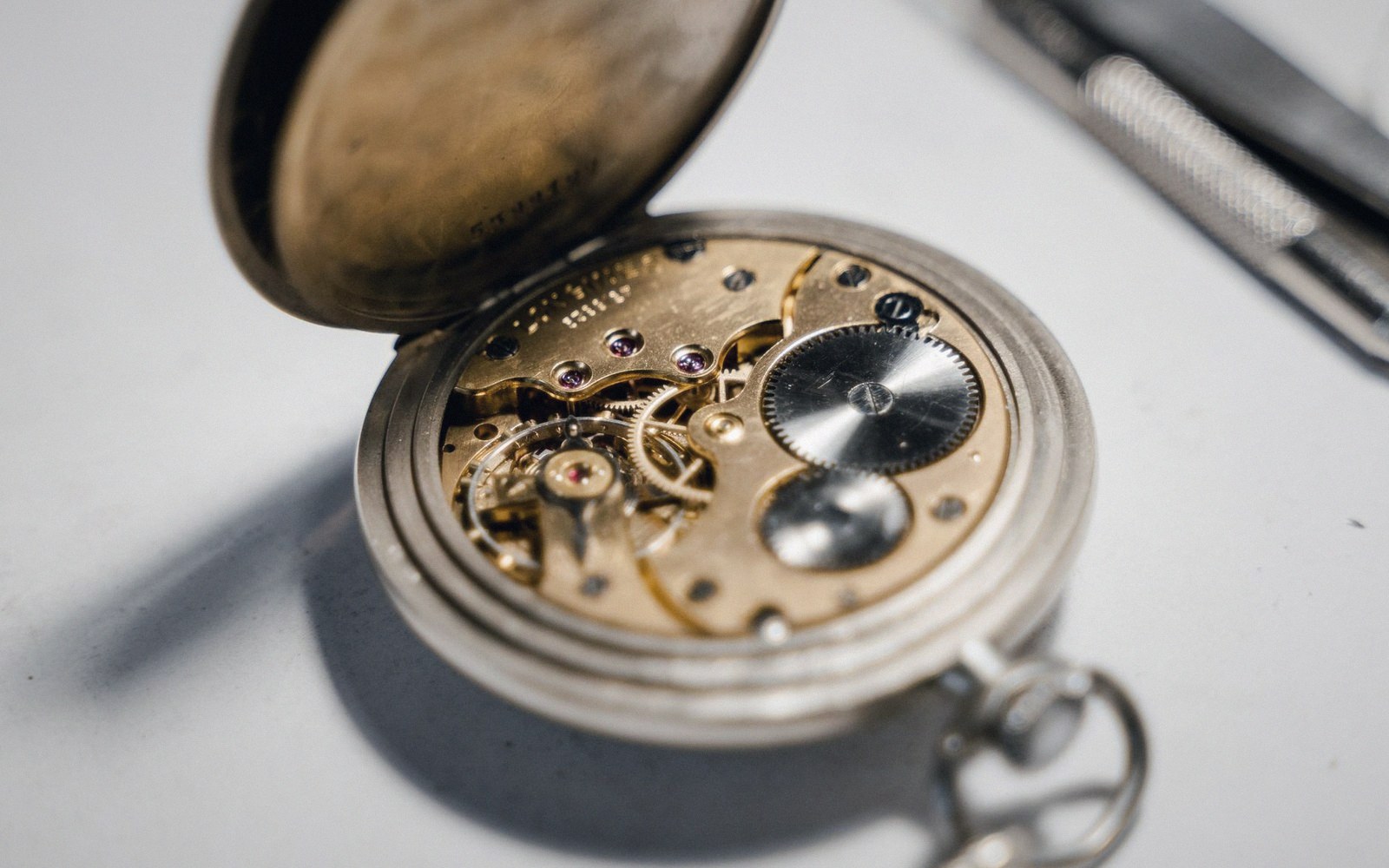
Hard bearings at the fastest pivots. What they actually reduce.
Makers and institutions whose knowledge of the regulated second runs close to ours.
Principal supporters
And with support from