The Oscillator · Entry 05
The Alloy That Solved It
A material that barely expands, and what it did to precision timekeeping.
A nickel-iron alloy that barely moves with temperature — and what its discovery did to the precision pendulum.
The Problem a Material Solved
Every precision clockmaker before the twentieth century lived with the same anxiety: heat lengthens a pendulum, a longer pendulum swings more slowly, and the clock loses time. The quantitative form is blunt — a steel pendulum rod changes length by roughly eleven parts per million for every degree Celsius. Over a London summer, that is enough shift to matter to any serious regulator.
The answers available were gridiron and mercury: compensating pendulums built from metals with opposing expansions, clever in design and requiring painstaking adjustment. They worked, and they were the best option available — until 1896, when the Swiss-French physicist Charles Édouard Guillaume measured the thermal expansion of nickel-iron alloys at the Bureau International des Poids et Mesures in Sèvres and found something that should not, by ordinary metallurgical expectation, have existed.
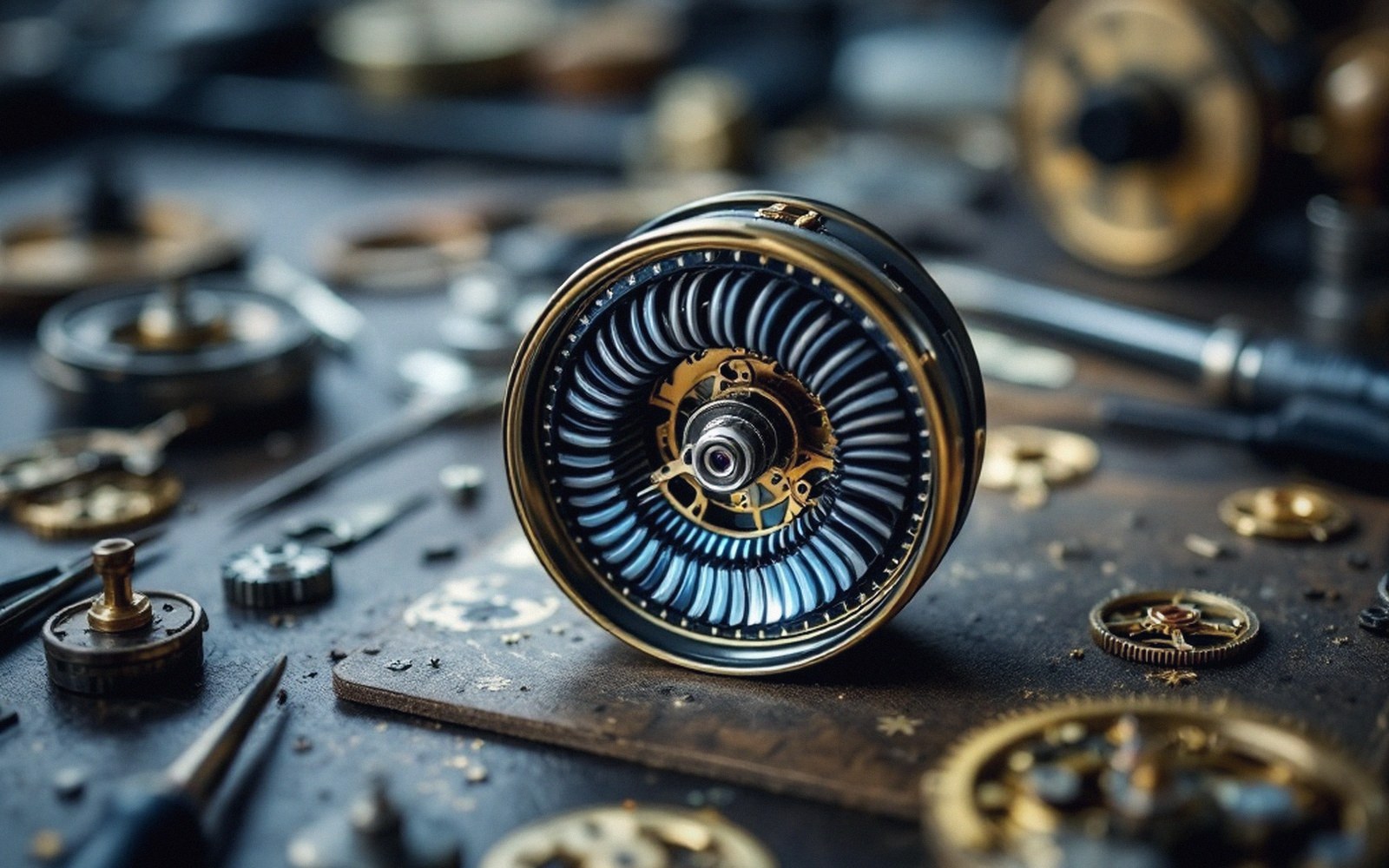
An alloy of roughly 36 percent nickel and 64 percent iron expands almost not at all. Its coefficient of thermal expansion is approximately 1.2 parts per million per degree Celsius — one-ninth the figure for steel. Guillaume named it Invar, from invariable. He received the Nobel Prize in Physics in 1920 for the finding.
What Invar Actually Changed
The immediate effect on precision pendulums was substantial. A plain Invar rod, without any compensation arrangement at all, outperformed most compensated steel pendulums in practice, because compensation mechanisms introduce their own errors: friction in the joints, imperfect matching of expansion rates, small hysteresis effects in the metals as temperature cycles. Removing all that mechanical complexity while also reducing the underlying expansion problem by 90 percent was a genuine advance.
Invar became the standard rod material for precision regulator pendulums. The Greenwich observatory, Riefler in Munich, Shortt in London — the movements that defined observatory timekeeping in the early twentieth century all used it. William Hamilton Shortt's free-pendulum clock, which appeared in 1921 and became the most accurate mechanical timekeeper then made, was built around an Invar pendulum.
From the bench notes
Chronology
- 1896Guillaume measures anomalously low expansion in nickel-iron alloys at Sèvres
- 1920Guillaume awarded Nobel Prize in Physics for the discovery of Invar
- 1921Shortt free-pendulum clock introduced, using Invar pendulum rod
What Invar could not do was eliminate the residual expansion entirely. The alloy's properties also vary slightly with the precise nickel content and with the history of the metal — how it was rolled, annealed and aged. A pendulum made from poorly treated Invar could behave worse than expected. Observatory practice required careful sourcing and sometimes partial compensation was retained alongside the Invar rod for the final fraction of error.
Still, the alloy shifted the frame of the problem. Where clockmakers had wrestled with compensating mechanisms for two centuries, Invar compressed the residual into a range that regulation alone could address. It is one of the cleaner examples in horology of a materials discovery doing what no amount of mechanism had quite managed.
From the bench notes
What the alloy is
| Material | What it means |
|---|---|
| Composition | approximately 36% nickel, 64% iron |
| Name | Invar, coined by Guillaume from invariable |
| Expansion coefficient | approximately 1.2 parts per million per °C (vs. ~11 ppm/°C for steel) |
| Limitation | properties vary with exact nickel content and thermal/mechanical treatment of the metal |