After Mechanics · Entry 04
Getting the Time From Somewhere Else
Radio and network synchronisation — a clock that no longer needs to keep time, only to receive it.
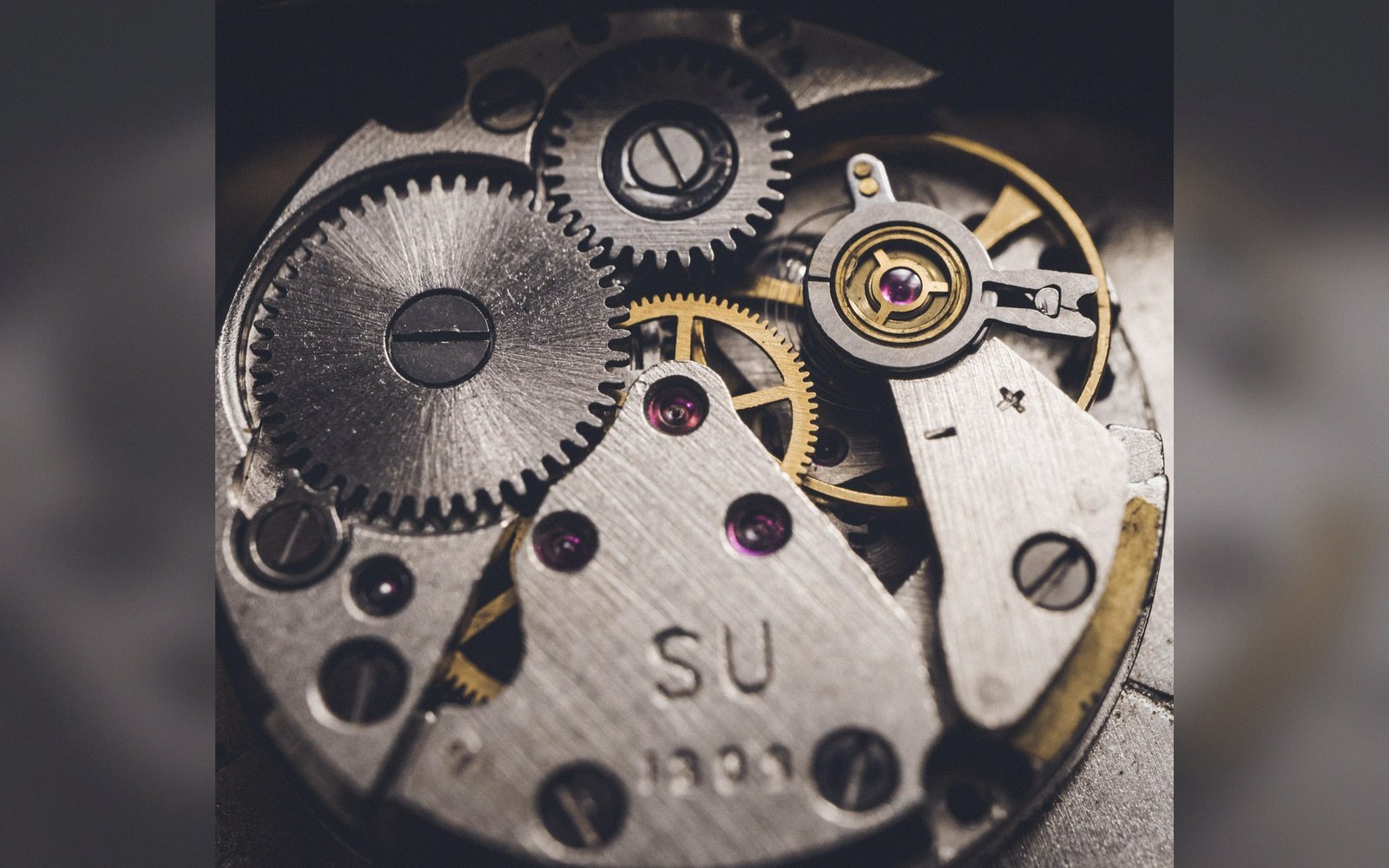
A clock that no longer needs to keep time, only to receive it.
The Signal Takes Over
Every mechanical clock described in this guide has one job at its core: maintain an oscillator and count its beats accurately enough that the accumulated count stays close to true time. It is a hard problem, and centuries of ingenuity went into solving it. Radio synchronisation sidesteps the problem entirely. Instead of keeping better time, the clock simply asks what the time is.
The principle arrived in usable form in the late twentieth century, when national standards laboratories began broadcasting time signals on long-wave frequencies stable enough to penetrate buildings. Germany's PTB, the Physikalisch-Technische Bundesanstalt in Braunschweig, transmits DCF77 on 77.5 kHz, a carrier that reaches most of Europe. The United States equivalent is WWVB at 60 kHz out of Fort Collins, Colorado, operated by NIST. Japan runs JJY, the United Kingdom runs MSF from Anthorn in Cumbria, having formerly transmitted it from Rugby. Each broadcast carries a time code — a slow, amplitude-modulated data stream encoding the current UTC offset, date and leap-second status — which a receiver decodes and uses to set the display. The oscillator inside a consumer radio-controlled clock is still quartz, but it matters only between synchronisation events; an error of several seconds a day is perfectly acceptable if the clock corrects itself every night.
Network time operates on the same substitution of reception for oscillation, at finer resolution. A device connected to the internet can query an NTP server — the Network Time Protocol, standardised in the 1980s — and receive a timestamp accurate to milliseconds, corrected for the round-trip delay of the query itself. The servers at the top of the NTP hierarchy, the stratum-1 machines, are disciplined directly by caesium standards or GPS receivers; everything downstream inherits that accuracy by a chain of comparisons, each stratum introducing a small additional uncertainty.
GPS itself is a time system disguised as a navigation system. Each satellite carries multiple atomic clocks and broadcasts the precise moment of transmission; a receiver calculates position from the differences in arrival time between signals from several satellites, and in doing so has access to time accurate to tens of nanoseconds. A GPS-disciplined clock needs no escapement, no compensation for temperature, no regulation. It needs a clear view of the sky, or a receiver that does.
What is left for the movement to do? On a radio-controlled wall clock, very little: drive hands to the position the signal specifies, once a day. The entire tradition described in this guide — the balance, the lever, the hairspring's metallurgy, the fusee — belongs to a world where the timekeeper had to generate its own accuracy. Reception is simply cheaper, and accurate enough for almost every purpose.
From the bench notes
Key transmitters and systems
| System | What it means |
|---|---|
| DCF77 | 77.5 kHz long-wave time signal, broadcast by PTB from Mainflingen near Frankfurt; covers most of Europe |
| WWVB | 60 kHz signal from Fort Collins, Colorado; operated by NIST; covers continental United States |
| JJY | Japanese long-wave time signal, operated by NICT on two frequencies from two transmitters |
| MSF | UK time signal, formerly Rugby, now Anthorn, Cumbria; operated by NPL |
| NTP | Network Time Protocol; synchronises computers and devices over IP networks to within milliseconds |
| Stratum | NTP hierarchy level; stratum-0 is an atomic or GPS reference, stratum-1 is directly connected to it, and so on |
| UTC | Coordinated Universal Time; the international civil time standard that all these signals carry |